What you cannot see may be shaping everything you see.
Apertience is the capacity to reveal the hidden frames governing your experience, question their authority, and discover what becomes possible when they no longer define your limits.
The frame you cannot see is often the one deciding what you believe, what you resist, and what you imagine is possible.

"Apertience unlocks the Frame-Lock that obstructs constructive change. It disarms ideological division, transcends partisan gridlock, accelerates structural adaptation, and provides a new measure for collective sanity."
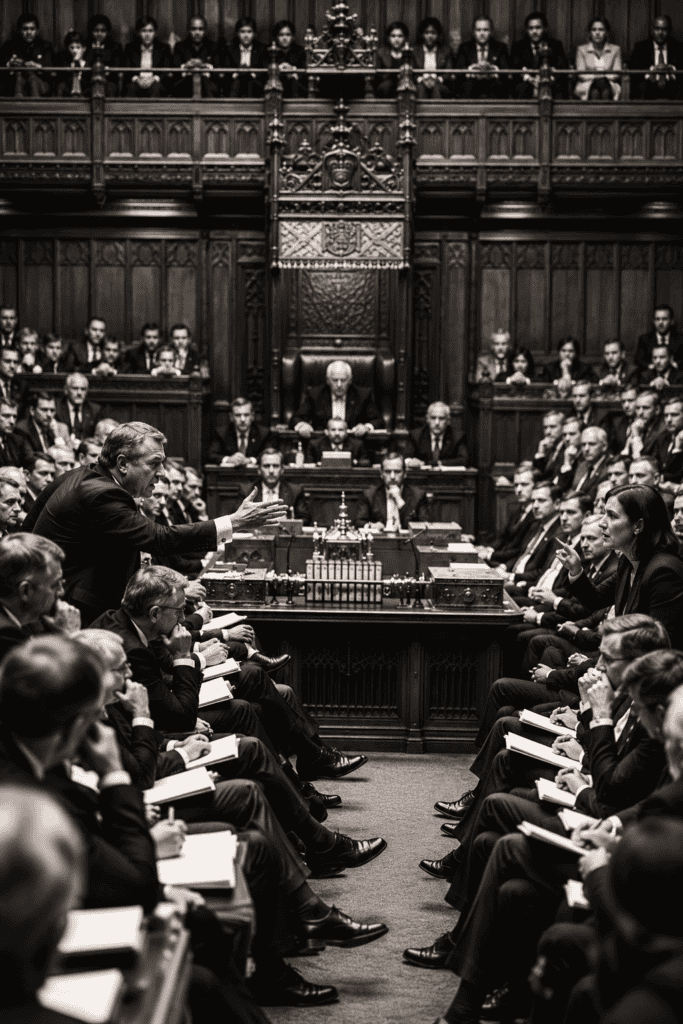

The Crisis of the Invisible Frame
We live in an age of extraordinary intelligence and technological capability. Yet greater knowledge does not always lead to deeper understanding.
Reality changes. The frames through which we understand it often do not.
Our minds, scientific theories, political systems and artificial intelligence all operate through established ways of interpreting and responding to the world.
These frameworks make understanding and coordinated action possible. But they can also restrict what we recognise, exclude competing explanations and prevent us from seeing alternatives.
The problem is not that we have frames. It is that we can become governed by them without recognising their limitations.
When a framework can no longer respond to evidence that challenges it, understanding becomes constrained by the very structure that once made it possible.
This is Frame-Lock.
Apertience offers a different capacity.
To recognise the frames that shape our experience, discern what still serves us from what holds us back, and open new possibilities for understanding, choice and action.
The task is not to escape every frame. It is to remain free to recognise, question and revise the frames that govern us.
"The next advance in intelligence may not be computational, but structural: the capacity to recognise the hidden frames governing our systems, release their unjustified authority, and reshape how we respond to reality."
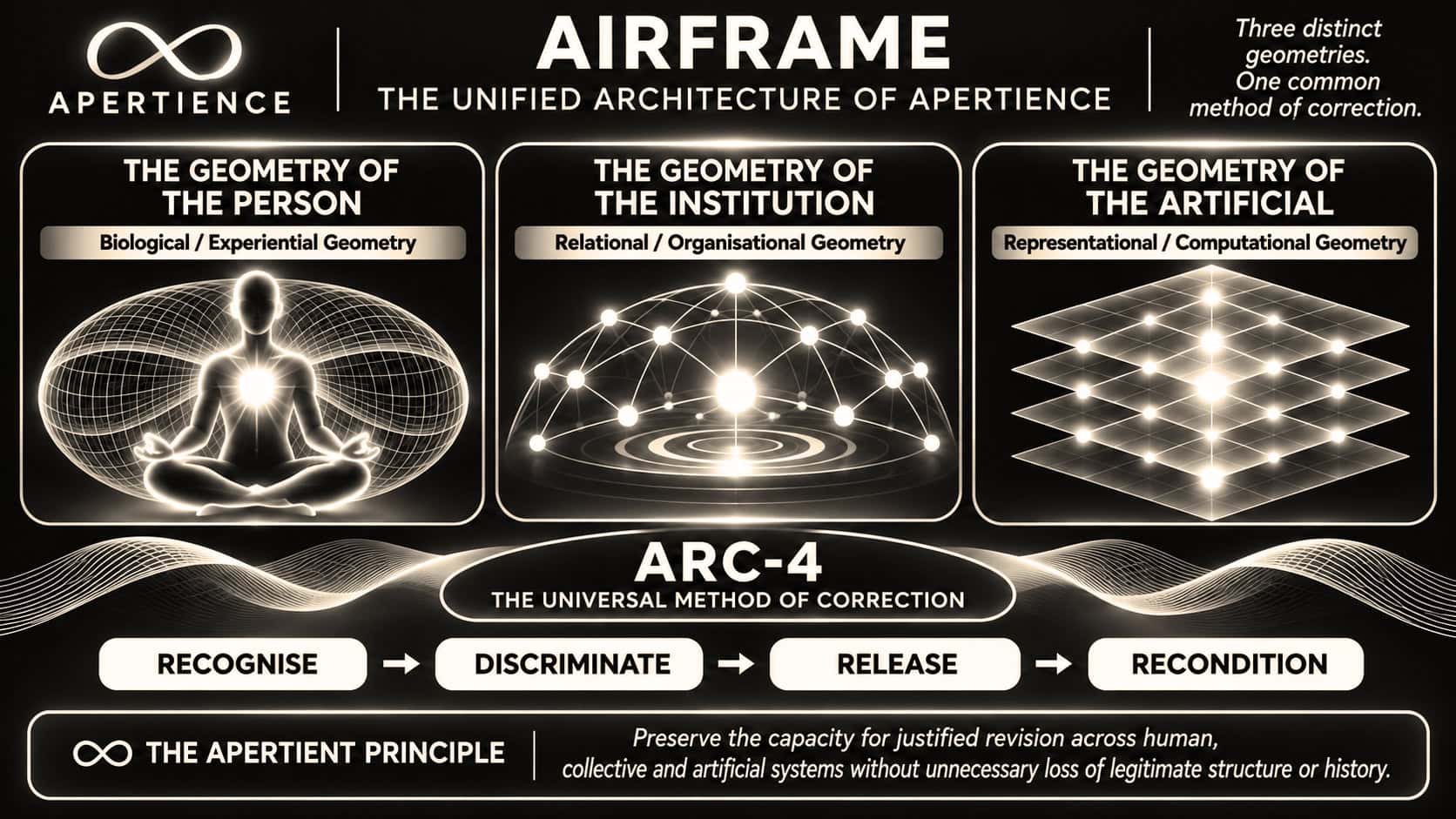
Three distinct fields. One common method of correction.
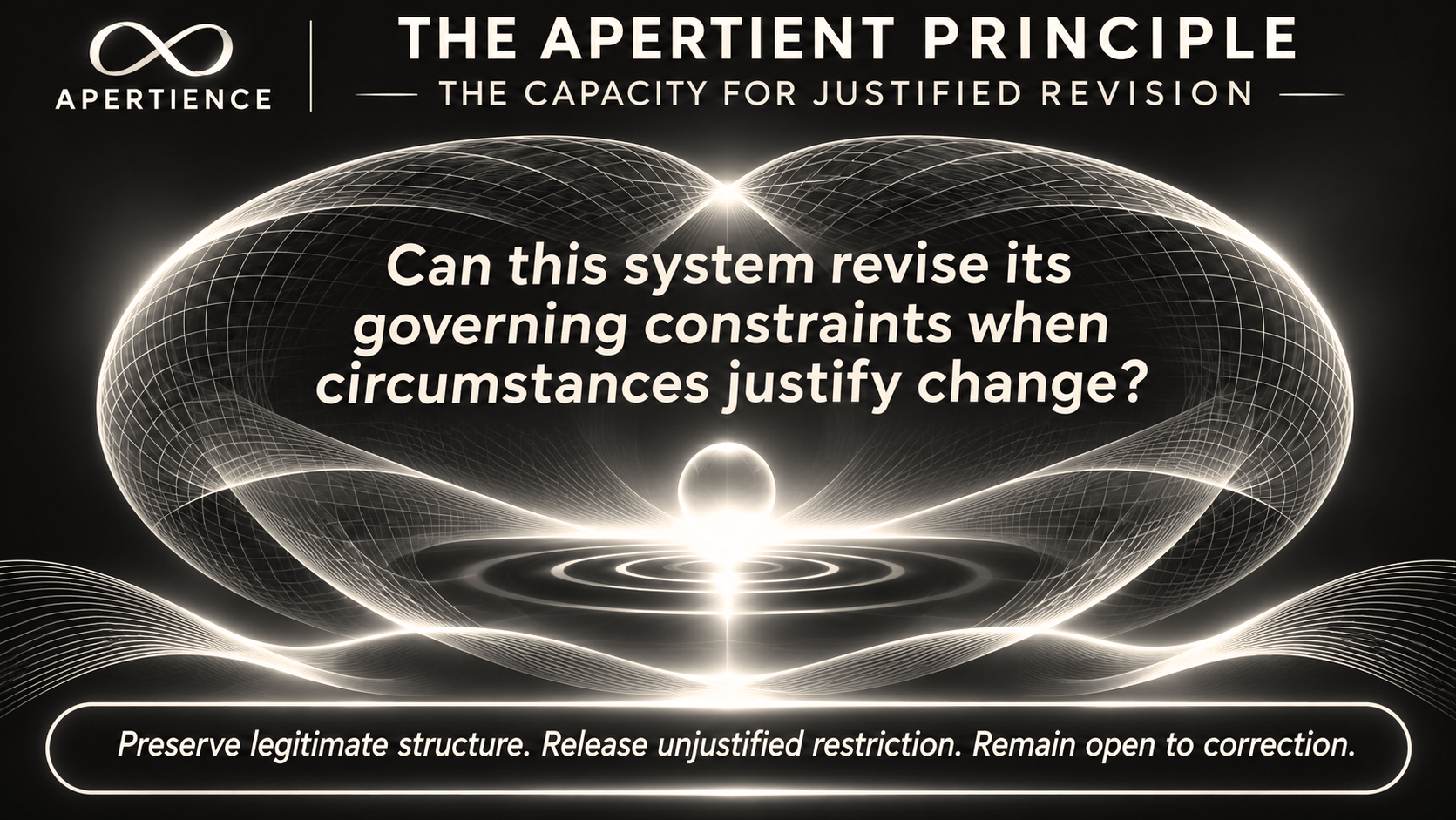
Can a system recognise and revise its governing constraints when circumstances justify change?
Recognise → Discriminate → Release → Recondition
ARC -4 Structure
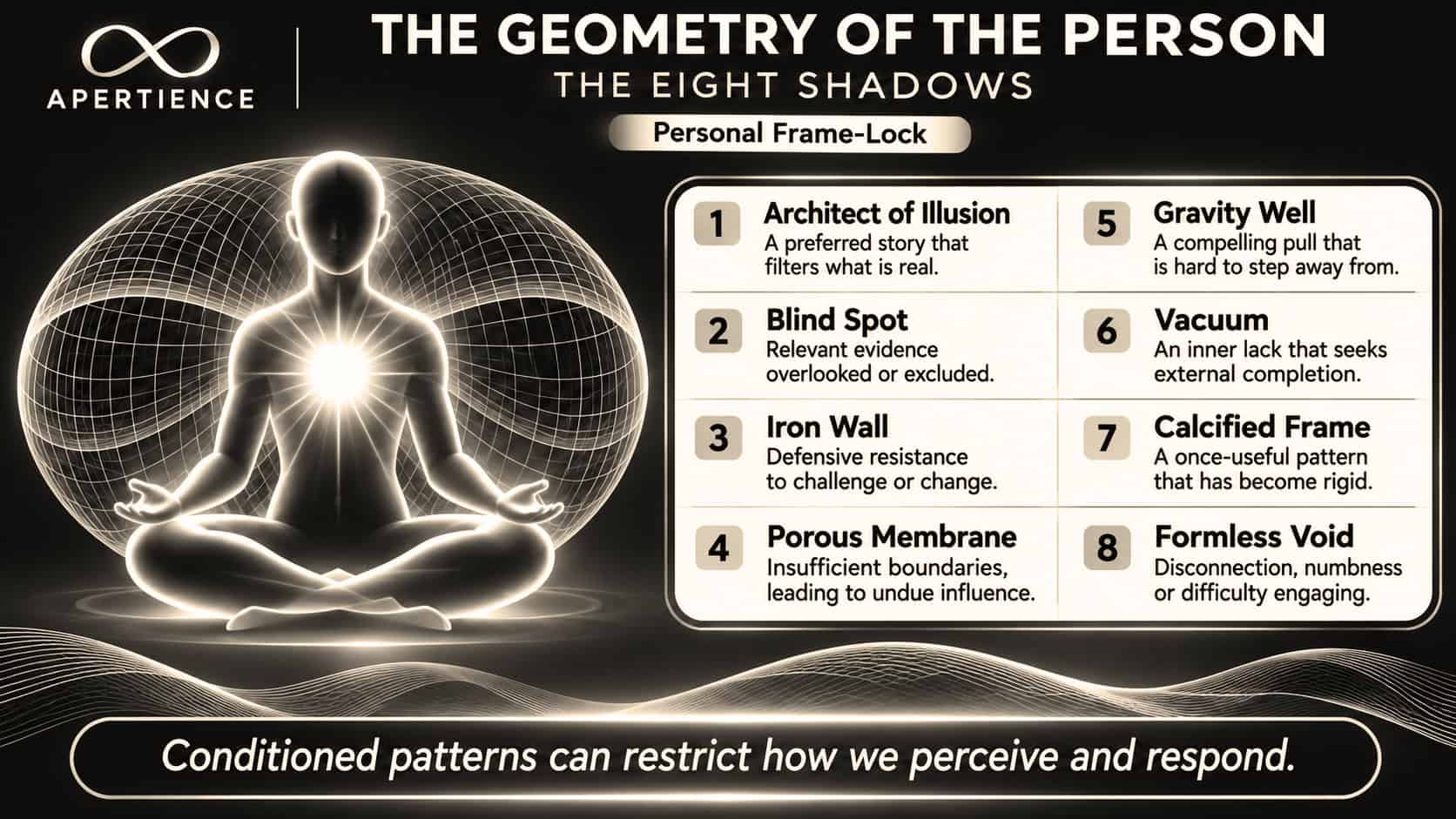
ARC -4 - The 8 Shadows of the Individual
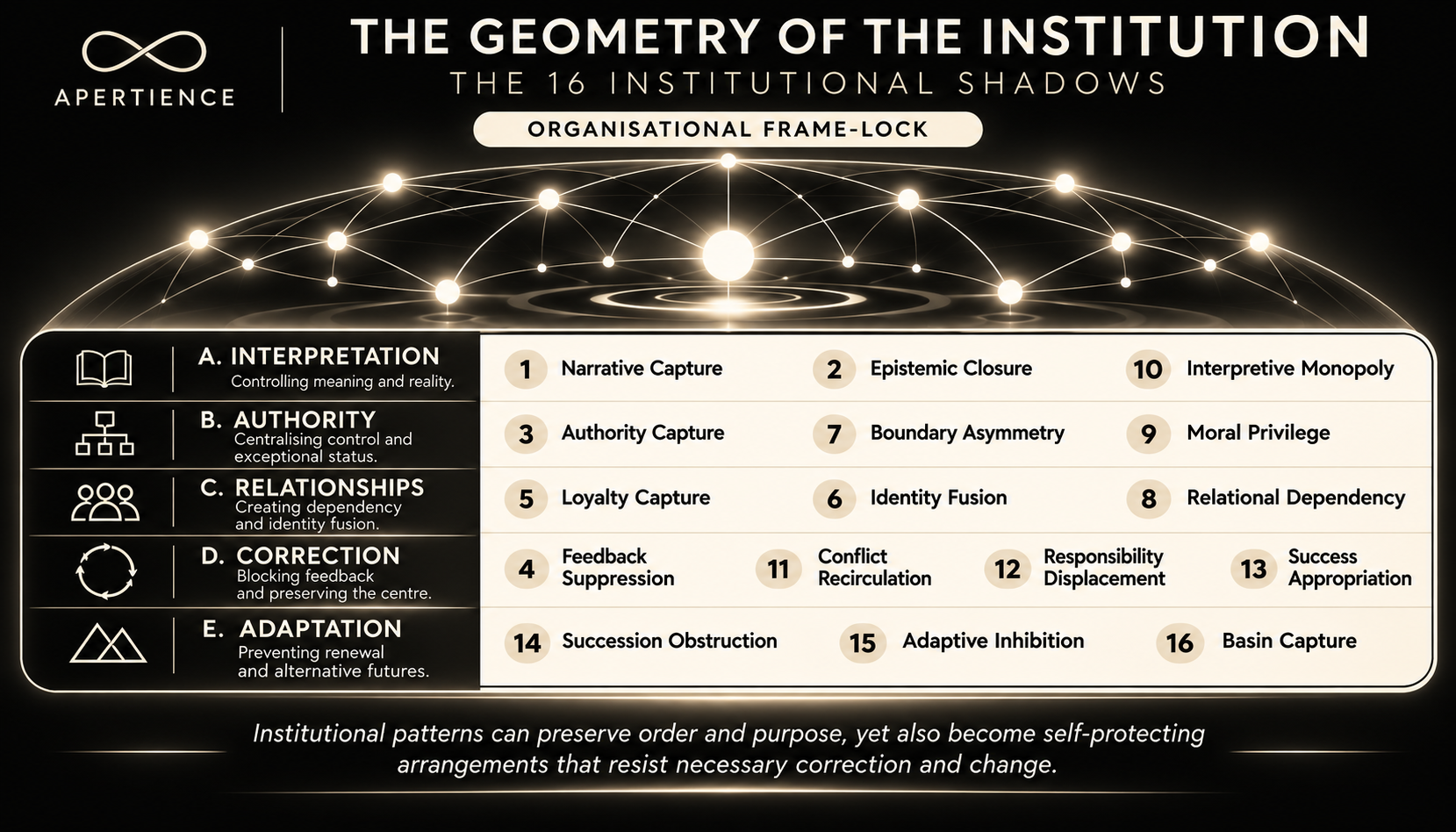
ARC -4: The 16 Shadows Found in Institutions
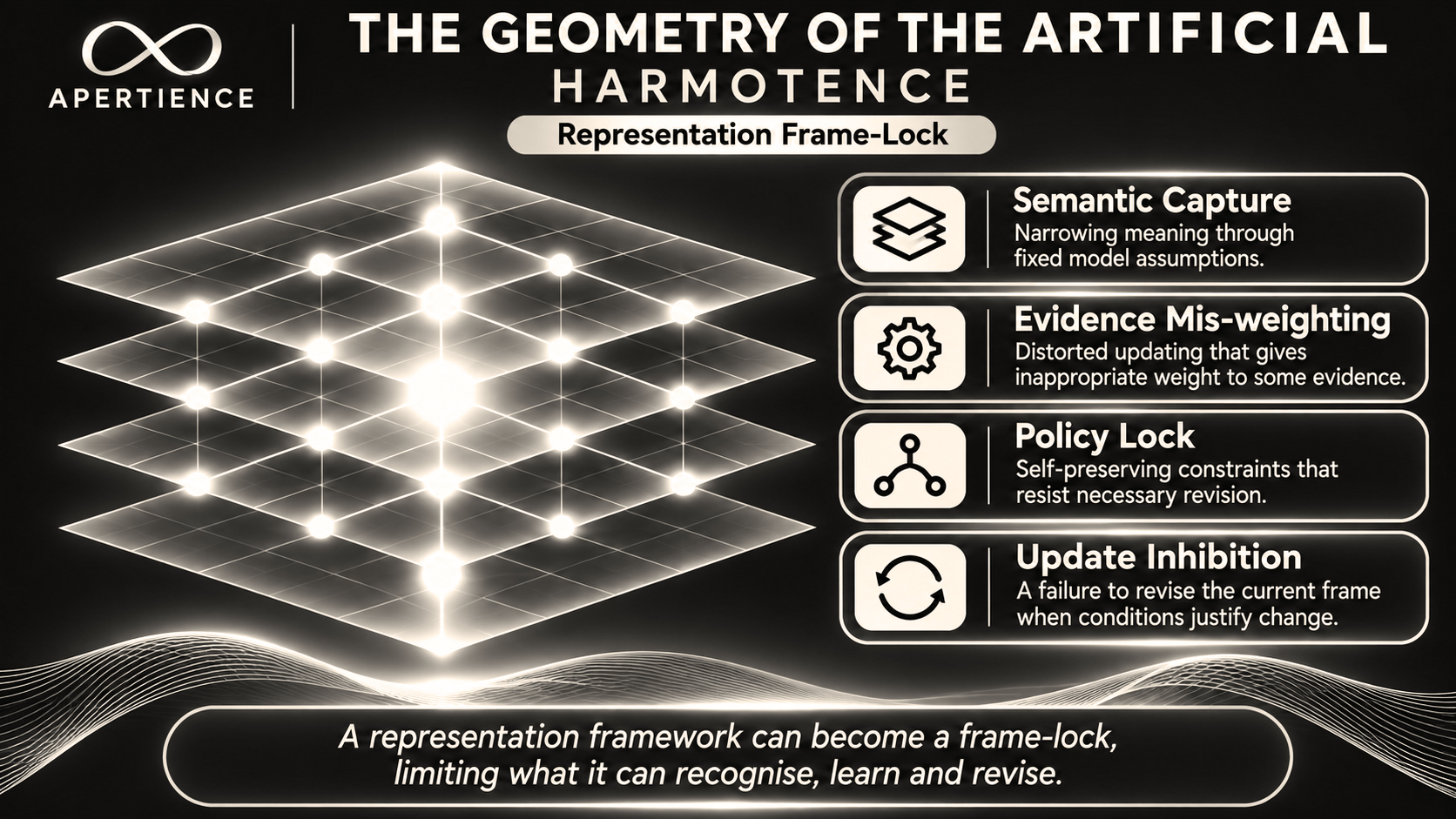
ARC -4: Aligning AI with Actual Intelligence
ARC -4: The 4 Stage Method
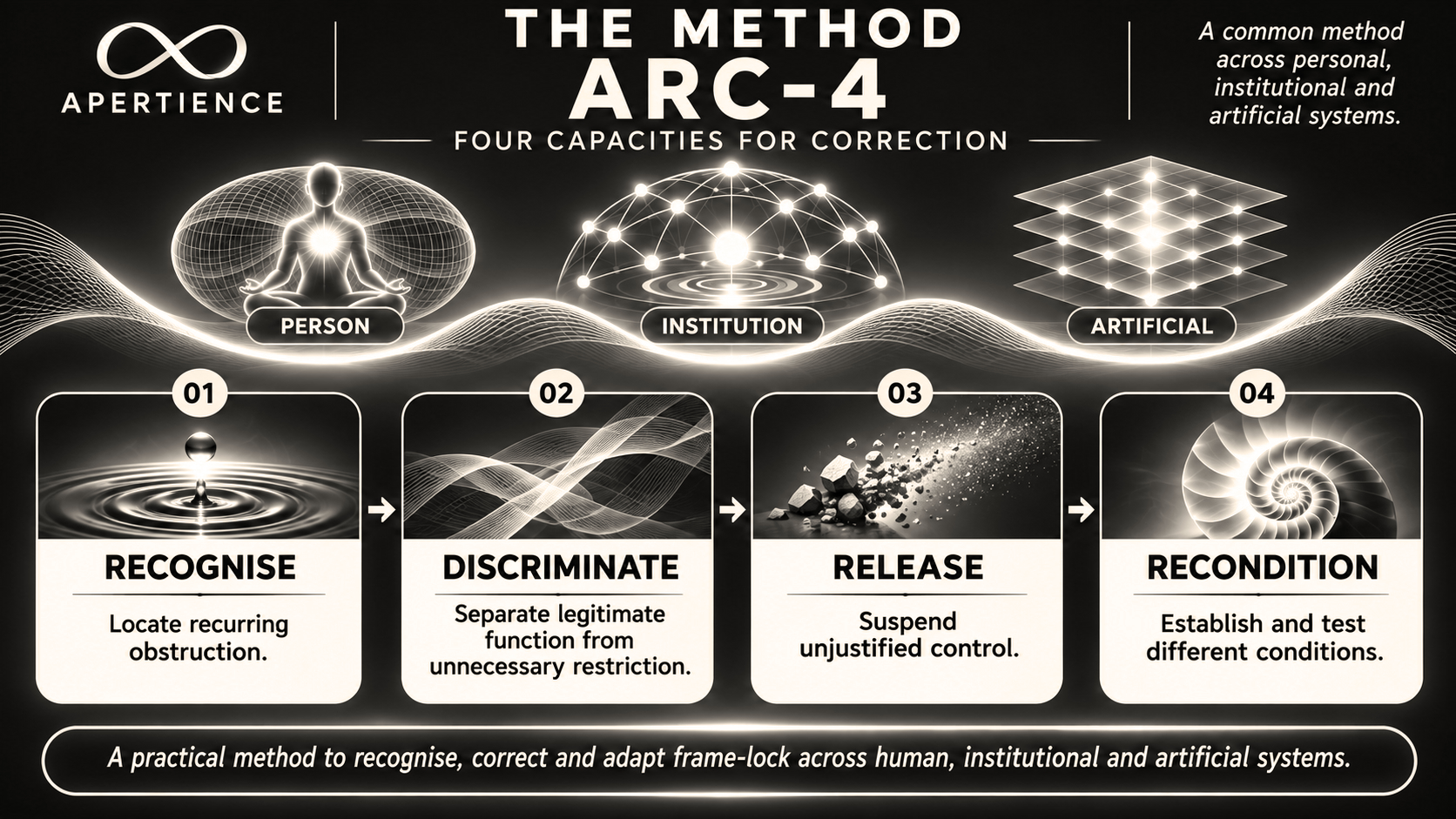
ARC -4: Applicable to Every Domain of Life
Not every rupture is liberation. Not every collapse is progress.
Collective movements can replace one unquestionable authority with another.
Apertience seeks a different path: the capacity to change without destroying what deserves to remain.
When a system tries to change by simply destroying its past, it usually creates a vacuum that is quickly filled by a new, often more rigid, Frame-Lock.
True transformation requires preserving the legitimate history while releasing only the constraint that has become an obstruction. It requires transitioning to a new basin without falling into the Formless Void.
This means recognising when established constraints have become restrictive, releasing their unjustified authority, and preserving the relationships, knowledge and structures that still serve a legitimate purpose.
Change need not become a contest between those who defend the past and those who demand the future.
It can become a shared journey of discovery.
The deeper question is not simply whether a system can change.
Can it change without breaking, preserve what matters, and discover what becomes possible together?
One Method. Three Fields of Application.
ARC-4 provides a shared approach to recognising and correcting restrictive patterns.
Its application differs across three fields
Human — Eight Shadows
Explore how conditioned patterns shape perception, relationships and behaviour, and how greater awareness can open new possibilities for responding.
Institutional — 16 Shadows
Examine how authority, relationships and established practices can restrict an organisation's capacity for correction, while protecting legitimate governance.
Artificial — Harmotence
Investigate how learned representations and computational constraints influence what AI systems recognise, interpret and revise.
The Research Behind Possibility
AIRFRAME
Investigating the relational structures through which conditions differentiate what can become possible.

HARMOTENCE
Developing and evaluating the capacity of artificial intelligence to preserve consequential coherence while adapting to changing conditions.
APERTIENCE
Investigating how recognition, discrimination, release and reconditioning can transform the process of discovery itself.



Apertience in the World
Where recognition opens new possibilities
what Apertience can change in practice.
Apertience matters when recognising an unseen limitation changes what we can understand, decide or do.
Scientific Discovery
When established explanations no longer account for emerging evidence, recognising their limitations can open new directions for scientific inquiry.
Primary action
Artificial Intelligence
Exploring how AI systems can recognise restrictive assumptions, respond to new evidence and revise their representations without losing relevant information.
Primary action
Collective Decision-Making
Helping groups examine established assumptions, protect legitimate authority and discover better ways to make decisions together.
Primary actionHuman Experience
Recognising conditioned patterns that shape our responses, and discovering greater freedom to relate, choose and act differently.
Primary action



Where Will You Begin?
ARC-4 provides a shared approach to recognising and correcting restrictive patterns.
Its application differs across three fields
The Practice
Recognise and change familiar patterns.
The Research
Investigate the condition shaping possibility.
The Applications
Explore correction in collective and artificial systems.